
The big question is whether Trump is any longer in command of the situation. For all practical purposes, the war seems set to cascade as the US is preparing for a potential ground operation in Iran and threatens to destroy 'bridges next, then electric power plants', points out Ambassador M K Bhadrakumar.

A senior government official confirms that Indian vessels do not require permission to navigate the Strait of Hormuz, despite regional tensions. Several Indian ships, including LPG tankers, have safely crossed the strait, ensuring continued supply of essential commodities to India.

Reliance Industries is expected to report largely flat performance for its fourth quarter (January-March, Q4) of FY26, with weakness in the oil-to-chemicals (O2C) business and muted retail growth likely to offset steady gains in the telecommunications segment.

India's first trillion-dollar company will be built on technology it owns, not just operates, predicts Ajay Kumar.

The Indian rupee experienced a significant surge against the US dollar following the Reserve Bank of India's measures to restrict banks from onshore forward markets. Despite this, the rupee remains under pressure from foreign capital outflows, a strong dollar, and rising crude oil prices.

According to a post on X by the US European Command, the tanker violated US sanctions and was tracked by the US Coast Guard cutter Munro prior to the operation.

'The West Asia or the Gulf crisis has shown that what we develop as national infrastructure when things are not as bad as they could be, we forget to plan for adversities.'

India summoned the Iranian envoy after two Indian vessels had to reverse course in the Strait of Hormuz following an incident of firing by Iran's Revolutionary Guards.

Karex, the Malaysian company that makes roughly one in five of the world's condoms -- about five billion a year, supplying Durex and Trojan among others -- announced this week that it is raising prices by up to 30 percent. The reason is the Strait of Hormuz.

India's EV ecosystem is growing, but remains too underdeveloped to cushion a major oil supply shock.

The Indian rupee depreciated by 32 paise to close at 92.83 against the US dollar, influenced by escalating global tensions, particularly the US-Iran conflict, and the deadline for the RBI's instructions to banks to curb overnight positions.

India continues to face LPG supply challenges for the third consecutive week due to disruptions caused by the West Asia conflict, though panic buying is showing signs of easing. The government is prioritising domestic household supplies and encouraging alternative fuel sources.

Inflation data, trading activity of foreign investors and global trends would dictate sentiment in the stock market this week, according to analysts.
The Indian rupee weakened against the US dollar due to a strengthening dollar, high crude oil prices, and foreign fund outflows amid geopolitical uncertainties.

10 stocks from the Nifty 200 index that offer good growth potential and scope to deliver decent returns from current levels, based on brokerage estimates.

India is the only significant power that all parties trust, or at least do not distrust, notes former defence secretary Ajay Kumar.

Godrej Consumer Products Ltd (GCPL) delivered a robust Q4FY26 performance, with steady demand in India and signs of stabilisation in international markets, despite persistent inflationary pressures. The company expects to maintain profitability in FY27 through strategic cost management and pricing adjustments.

India's services sector growth reached a five-month high in April, with the HSBC India Services PMI Business Activity Index rising to 58.8, primarily driven by robust domestic demand and a shift from international to local suppliers amidst the West Asia crisis.

Iran has asserted that maritime movement through the Strait of Hormuz will be strictly controlled by Tehran, stating that passage will be allowed only through designated routes and under Iranian approval.

Indian stock markets recovered from early losses to close higher, driven by value buying in IT and banking shares and a rebound in the rupee.

India and the US have reported positive progress in recent trade talks in Washington, agreeing to maintain engagement to finalise a bilateral trade agreement, which now requires recalibration following new US tariffs.

President Trump has been briefed on potential military actions against Iran, including strikes on infrastructure and control of the Strait of Hormuz, even as negotiations continue. He maintains economic pressure is the primary strategy, while legal questions arise over war powers.

Even if there is an early agreement on a cessation of hostilities in West Asia, the price shock will not go away easily, points out A K Bhattacharya.
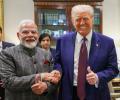
The agreement addresses non-tariff barriers and promotes increased trade in technology products and cooperation between the two countries.

Donald Trump claims a senior defence official urged military action against Iran, revealing escalating tensions and ongoing negotiations in the Middle East.
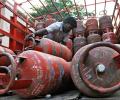
Delhi Police have dismantled an illegal operation involving the storage of over 600 LPG cylinders and arrested an individual for illegally refilling gas cylinders, highlighting concerns over safety and black market activities.

'Even if the war ends tomorrow, which is unlikely, and we go back to the pre-war status quo, the world will still need some time to get over the sudden shock of oil price increases.'

Foreign investors have withdrawn a record Rs 1.14 lakh crore from Indian equities in March, driven by geopolitical tensions, a weakening rupee, and concerns about crude oil prices.

Stock markets closed higher on Friday after the Reserve Bank of India kept its benchmark interest rate unchanged as expected and proposed allowing banks to lend to Real Estate Investment Trusts (REITs) with certain prudential safeguards to deepen the financing pool for the real estate sector.

The Indian rupee weakened against the US dollar due to sustained foreign fund outflows and uncertainties in West Asia, although lower crude oil prices and a positive opening in domestic equity markets limited the losses.

Tensions between Washington, DC and Tehran have reached a boiling point, as a heavy barrage of aerial strikes was reported across multiple locations in Iran on Tuesday.

The Indian government has reduced excise duty on petrol and diesel to mitigate the impact of rising global crude prices, triggered by geopolitical tensions in the Middle East. This move aims to provide relief to consumers and oil companies amidst volatile international oil markets.

Foreign investors have withdrawn over Rs 88,000 crore from Indian equities this month, driven by geopolitical tensions, a weak rupee, and concerns about rising crude oil prices.
Domestic institutional investors, on the other hand, made a net investment of Rs 1.13 trillion during this period.
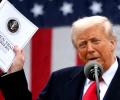
India is closely monitoring developments related to a proposed American legislation that seeks to impose up to 500 per cent tariff on countries procuring Russian crude oil.

New demat account additions in India reached an 11-month low in March, with only 2.15 million new accounts opened, significantly below the 12-month average. This slowdown is attributed to a sharp decline in equity markets, escalating West Asia tensions, and increased crude oil prices impacting India's economic outlook.

Reserve Bank of India (RBI) Governor Sanjay Malhotra stated that preventing second-round effects of supply shocks, where inflation expectations rise due to prolonged disruptions, is the primary role of monetary policy. He also defended the RBI's foreign exchange market interventions, asserting it did not commit to an 'indefensible peg'.

The core issues to be settled -- access to Hormuz, Israel's aggression in Lebanon, the question of Iran's nuclear programme, sanctions relief and compensation -- are thorny enough to require weeks of patient negotiation. The most likely outcome of the opening sessions is that both sides take the measure of each other, establish what is and is not negotiable, and return home without having broken anything. That would count as progress.

S&P Global Ratings warns that a sustained rise in crude oil prices to $130 per barrel could significantly slow India's economic growth, weaken fiscal metrics, and strain corporate and banking sector performance, potentially reducing growth by up to 80 basis points.

...reopen for up to six months. Until then, the Strait stays nearly closed. The world pays. And no one, including the man who started this, can say when it ends, notes Prem Panicker in his must read blog on the Iran War.
